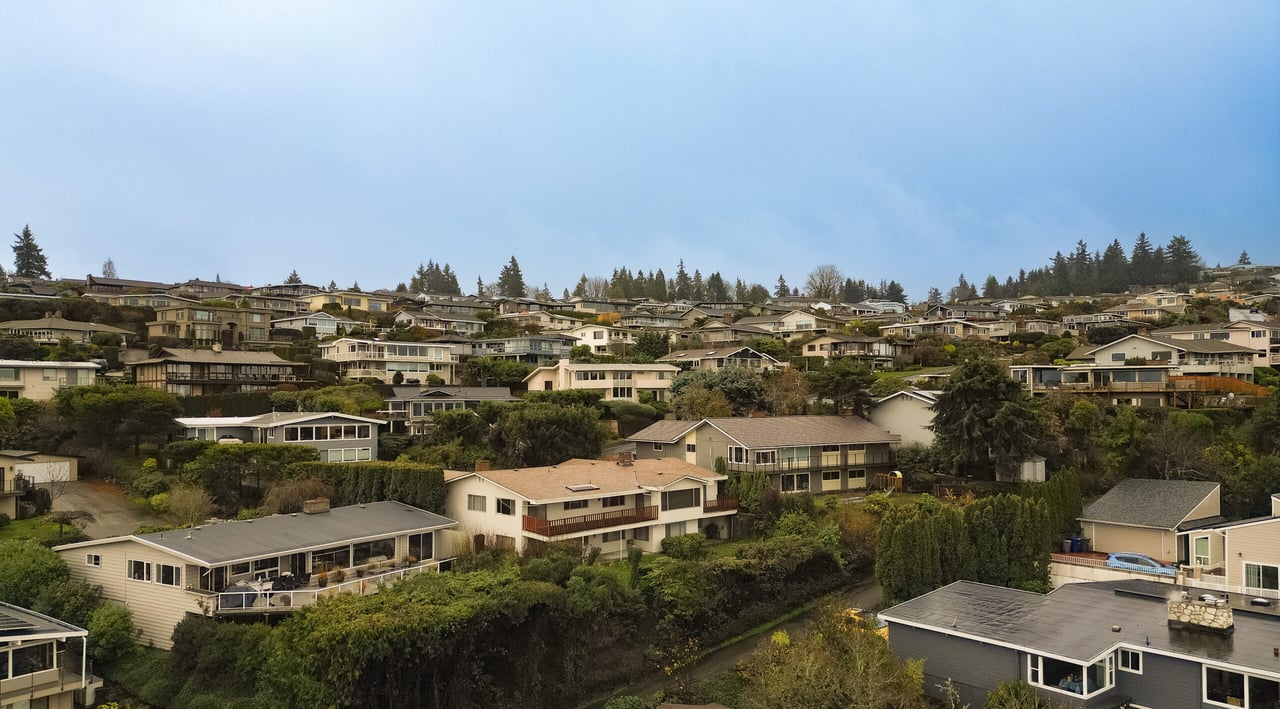
Trying to choose between Kirkland and Redmond? You are not alone. Both cities are popular Eastside home bases, and both offer strong amenities, access to jobs, and a wide range of housing, but they feel different in the ways that shape your day-to-day life. If you are weighing where to buy next, this guide will help you compare housing, transit, lifestyle, and where to focus your search. Let’s dive in.
Kirkland vs. Redmond at a glance
If you only want the short version, here it is: Kirkland tends to appeal to buyers who want a waterfront setting and an established downtown feel, while Redmond tends to stand out for direct light rail access, trail connections, and transit-oriented growth.
That does not mean one city is better than the other. It means your best fit depends on how you want to live, commute, and spend your free time.
Housing costs are close
When you compare broad housing costs, neither Kirkland nor Redmond comes across as a budget Eastside option. Census figures show median values of owner-occupied homes at $1,115,400 in Kirkland and $1,167,800 in Redmond.
Rents are also very close. Median gross rent is about $2,401 in Kirkland and $2,409 in Redmond, which suggests that affordability differences are not dramatic at a high level.
For many buyers, that means the decision is less about finding a clearly cheaper city and more about choosing the housing style and daily routine that match your goals.
Ownership and density feel different
One useful difference is ownership mix. Kirkland has a higher owner-occupied housing unit rate at 60.8%, compared with 43.2% in Redmond.
Kirkland is also somewhat denser, with 5,176.6 people per square mile versus 4,421.8 in Redmond. In practical terms, both cities are active and built-up, but the pattern of growth and housing can feel different depending on where you focus your search.
Where condos and townhomes cluster
Kirkland growth areas
In Kirkland, city planning concentrates housing and jobs in Greater Downtown, Totem Lake, the NE 85th Street Station Area, and neighborhood centers. The city also highlights middle housing, higher density along transit corridors, and added capacity in commercial and mixed-use areas.
Greater Downtown includes Kirkland’s historic downtown and combines mixed-use commercial space with high- and medium-density residential areas. That makes it a natural place to start if you want attached housing close to shops, services, and future transit improvements.
Redmond growth areas
Redmond’s planning is even more directly tied to transit. The city says it has been planning around light rail for more than two decades, and station areas are generally within a 10-minute walk of high-capacity transit.
Areas around the light rail station allow buildings up to 12 stories with incentives, and Downtown Redmond is expected to absorb one-third of planned housing growth through 2030. The city also reports that more than 1,200 new multifamily homes have been permitted there since 2010.
What that means for your search
If you are shopping for a condo or townhome, the mixed-use cores in both cities are likely to offer the strongest options. In Redmond, that search is usually more station-centered. In Kirkland, it is more likely to center on Downtown, Totem Lake, and the future NE 85th Street corridor.
That can be a helpful filter early in your search. Instead of treating each city as one uniform market, focus on the nodes where attached housing is most actively planned and built.
Commute convenience depends on transit style
At first glance, commute times do not separate the two cities much. Census data show an average commute of 23.9 minutes in Kirkland and 22.1 minutes in Redmond.
That is a small difference. For most buyers, the bigger question is not a couple of minutes on paper. It is whether you want direct rail access now or whether you are comfortable with a bus, BRT, and driving mix.
Redmond has direct light rail access
The biggest transportation advantage in Redmond is rail. Sound Transit says the East Link Extension fully opened on March 28, 2026, connecting the Eastside to the 1 Line in Seattle.
Redmond also says the light rail connection across Lake Washington is open and provides fast, frequent, and reliable connections around town, Bellevue, Seattle, and the wider region. The city has also built access infrastructure for its four light rail stations, which reinforces a transit-first pattern for many residents.
Kirkland is more bus and BRT oriented
Kirkland’s near-term transit story is different. The city is planning the RapidRide K Line, a new bus route expected to begin in 2030 and connect Totem Lake, Downtown Bellevue, and Eastgate.
Kirkland also says it is working to reduce dependence on single-occupancy vehicles through its Transportation Strategic Plan. In Greater Downtown Kirkland, the city also identifies a future Sound Transit Stride bus rapid transit station area.
How to think about the commute question
If your top priority is stepping onto light rail today, Redmond has the clearer edge. If you are comfortable with bus rapid transit, driving, and a mix of transportation options, Kirkland may still fit very well.
This is why commute planning should be personal. The right answer depends on where you work, how often you travel, and whether your routine benefits more from rail or from access to Kirkland’s planned transit corridors.
Lifestyle: waterfront or trails
For many buyers, the real difference between Kirkland and Redmond shows up after work and on weekends. Each city offers a distinct setting and rhythm.
Kirkland’s waterfront appeal
Kirkland’s standout lifestyle feature is its lakefront setting. The city describes Marina Park as a downtown park near restaurants and shops, with a sandy beach, boat launch, public art, an open-air pavilion, summer concerts, and views of Lake Washington and Seattle.
Kirkland also maintains the Cross Kirkland Corridor trail master plan to guide trail, transit, and utility alignment. That gives the city both waterfront access and an evolving trail network, but the lakefront identity is still what many buyers notice first.
Redmond’s parks and trail network
Redmond leans more heavily into parks and trails. The city says it has 47 parks covering 1,351 acres and 59 miles of public trails.
It highlights Downtown Park, the Redmond Central Connector Trail, and Marymoor Park as major amenities. Marymoor Park alone spans 640 acres and includes sports fields, an off-leash dog area, and multiple trail connections.
Redmond’s urban center feel
Redmond’s downtown also functions like a compact urban center. According to the city, Downtown Redmond includes shopping, dining, services, events, employment, mixed-use residences, hotels, and parks.
That creates a more center-city feel than many buyers expect. If you want an urban core paired with rail and trails, Redmond offers a very specific kind of Eastside lifestyle.
Planning priorities shape the future
One of the smartest ways to compare these cities is to look at what each one is building toward. Kirkland and Redmond are both growing, but they are not growing in the same way.
Kirkland’s planning emphasizes its historic downtown, waterfront access, and growth in Greater Downtown, Totem Lake, and the NE 85th Street Station Area. Redmond’s planning is more explicitly organized around light rail, mixed-use growth, and future transit-oriented development.
That matters because city planning often shapes what new housing gets built, where it gets built, and how easy it is to live a car-light lifestyle. If you are buying with the next 5 to 10 years in mind, these priorities deserve a close look.
Which city fits you best?
Choose Kirkland if you want
- Waterfront access that plays a bigger role in everyday life
- An established downtown setting with a historic core
- Search areas like Downtown, Totem Lake, or the NE 85th Street corridor
- A home base that blends parks, shopping, and future bus rapid transit improvements
Choose Redmond if you want
- Direct light rail access now
- A more station-oriented home search
- Strong access to trails, parks, and regional outdoor amenities
- A compact downtown with mixed-use growth and a more transit-first pattern
A practical way to narrow your search
If you are still torn, try comparing the two cities based on your actual weekly routine. Think about how often you would use light rail, how much you care about lakefront access, and whether you picture yourself spending more time in a downtown setting or on connected trails and parks.
Then narrow your search to the areas most aligned with your housing type. For condos and townhomes, that often means mixed-use downtown and station-adjacent areas in both cities, rather than lower-density edges.
The best choice is usually not the city with the strongest reputation. It is the city that fits your daily life with the least friction.
If you want help comparing locations, housing types, or next steps in your move, reach out to Yang Xiao for a free local market consultation.
FAQs
Is Kirkland or Redmond more affordable for homebuyers?
- Broadly, both are high-cost Eastside markets. Census figures show a median owner-occupied home value of $1,115,400 in Kirkland and $1,167,800 in Redmond.
Does Redmond have better transit than Kirkland?
- Redmond has direct light rail access through the East Link Extension, while Kirkland’s near-term transit story is more focused on bus and future BRT improvements like the RapidRide K Line.
Where should condo and townhome buyers look in Kirkland?
- A practical starting point is Kirkland’s mixed-use growth areas, especially Greater Downtown, Totem Lake, and the NE 85th Street Station Area.
Where should condo and townhome buyers look in Redmond?
- Redmond’s station areas and Downtown are strong places to start because the city’s housing growth is closely tied to light rail and transit-oriented development.
What is the main lifestyle difference between Kirkland and Redmond?
- Kirkland is more closely associated with waterfront living and an established downtown, while Redmond stands out for light rail access, trails, parks, and a compact urban center feel.
Are commute times very different between Kirkland and Redmond?
- Not by much in the census data. Average commute times are 23.9 minutes in Kirkland and 22.1 minutes in Redmond, so the bigger difference is usually transportation style rather than total time.