Buying your first home in Redmond can feel like a balancing act. You may love the idea of more space, a shorter commute, or a lower-maintenance home, but in this market, it is often hard to get all three at once. The good news is that if you understand the trade-offs clearly, you can make a smarter decision with more confidence. Let’s dive in.
Redmond first-time buyers face real choices
Redmond is a job-rich city with more than 80,000 residents and about 99,000 jobs, and the city says housing supply has not kept up with demand. It is planning for 24,800 new homes between 2019 and 2050, which helps explain why housing type, density, and transit access are such a big part of the local conversation.
That pressure shows up in pricing and pace. Redfin reported a median sale price of $1,299,222 for the three months ending May 2026, with homes selling in about 12 days and averaging two offers. For a first-time buyer, that means your decision is not just about what you like best. It is also about what trade-offs fit your budget and daily life.
Commute vs. space in Redmond
One of the biggest choices is whether you want to live closer to Redmond’s urban centers or in a more residential part of the city. Redmond describes Downtown and Overlake as its two urban centers, while Education Hill, Grass Lawn, Idylwood, and North Redmond are predominantly residential. That makes the commute-versus-space question very specific to where you look.
If you want easier access to jobs, dining, transit, and newer development, Downtown, Overlake, and Marymoor Village may stand out. If you care more about square footage, yard space, or a quieter residential setting, you may find yourself looking harder at the city’s more established neighborhoods.
Why commute costs matter
Your commute is not only about time. In Redmond, it can also affect your monthly budget. Sound Transit says the 2 Line now runs between Lynnwood and Redmond, and the Crosslake Connection opened on March 28, 2026, completing East Link across Lake Washington.
At the same time, WSDOT says SR 520 is a toll road, and congestion for Redmond to Bellevue commuters was more severe in 2023 than in 2022. So when you compare homes, think beyond the list price. A location that cuts down on driving or gives you better transit access may save you both time and out-of-pocket commuting costs.
Why more space may mean less convenience
Redfin still classifies Redmond as car-dependent overall, with some transit and bikeability. That means many first-time buyers are not choosing between driving and transit in a simple way. They are often choosing a mix of both.
A home farther from Downtown, Overlake, or a light rail station may give you more room, but it can also add complexity to your routine. You may spend more time driving, rely more on a car for errands, or pay more in tolls and fuel. For some buyers, that trade-off is worth it. For others, it wears on them quickly.
Newer builds vs. established neighborhoods
Another major trade-off in Redmond is age and setting. A newer home or condo near transit can offer lower-maintenance living and easier access to urban amenities. An established neighborhood may offer a more settled residential feel, mature trees, and a different streetscape.
Neither option is automatically better. The right fit depends on how you want to live day to day and what type of upkeep, atmosphere, and location matter most to you.
What newer transit-oriented areas offer
Redmond has directed much of its growth toward transit-oriented centers. Downtown’s 2025 zoning update consolidated 12 downtown zones into three and allows buildings up to 12 stories near the light rail station with incentives. Overlake’s 2025 update also expanded the urban center boundary and increased building height and floor-area allowances near light rail.
Marymoor Village is also evolving. The city describes it as a place in transition, with a mix of manufacturing, education, distribution industrial, and religious uses that will gradually add more diverse uses and buildings. It also benefits from a light rail station next to Marymoor Park and SR 520.
For a first-time buyer, that often means newer housing choices in areas planned for continued growth. You may get a more modern layout, easier transit access, and less immediate maintenance. In return, you may be buying into an area that is still changing.
What established neighborhoods offer
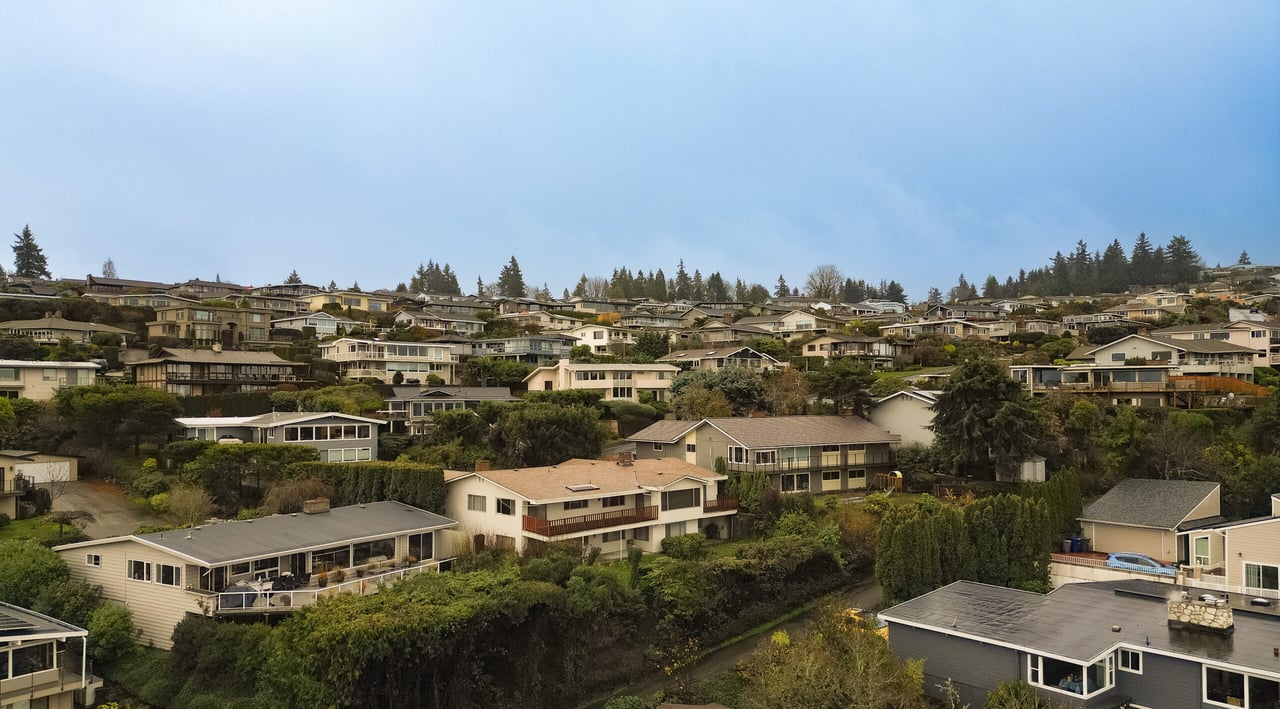
Education Hill is a mature, centrally located residential neighborhood that the city describes as having large trees and a walkable character. Areas like this often appeal to buyers who want a more established setting rather than a faster-changing urban center.
The trade-off is that older homes or older attached properties may come with different maintenance needs, layouts, or renovation priorities. If you are comparing a newer condo near light rail with an older home in a mature neighborhood, be honest about what you are willing to update, repair, or live without.
Detached home vs. attached home
For many first-time buyers in Redmond, the real decision is not just where to live. It is also what kind of home is realistic. The city’s housing analysis found that apartments make up 44.2% of the housing stock, detached homes 35.9%, and condos 14.5%, with relatively little middle housing today.
That matters because detached homes can be harder to access at entry-level price points in a high-cost market. Condos and townhome-style options may be the most practical path into homeownership, especially if you want to stay near transit or urban centers.
Why attached housing matters more here
Redmond is actively expanding its housing choices. In Neighborhood Residential zones, the city allows detached homes, duplexes, triplexes, fourplexes, townhouses, stacked flats, courtyard apartments, and cottage housing. Buyers should expect more attached housing and multifamily redevelopment over time, rather than a fixed supply of detached homes.
For you, this means keeping an open mind can help. If you start your search only focused on detached homes, you may miss options that better match your budget, commute, and lifestyle.
HOA dues vs. lower purchase price
If you are considering a condo or townhome, monthly dues are one of the biggest trade-offs to weigh. A lower purchase price may help you buy sooner or stay in a stronger location. But the monthly fee changes your real budget.
The Consumer Financial Protection Bureau says HOA or condo dues are usually paid directly to the association, not through your mortgage payment, and they can range from a few hundred dollars a month to more than $1,000 a month. Freddie Mac also treats HOA dues as a recurring homeownership cost alongside taxes, insurance, and mortgage-related costs.
What HOA dues may cover
HOA fees often pay for common-area upkeep and services such as water and sewage, trash removal, lawn care, pest control, common-area maintenance, and sometimes amenities like pools or gyms. Those services can reduce the amount of maintenance you handle yourself.
Still, dues can rise as service costs go up. So when you compare an attached home with a detached one, do not stop at the sale price. Compare the full monthly picture.
A simple monthly cost lens
Use this checklist when comparing options:
- Principal and interest
- Property taxes
- Homeowners insurance
- HOA or condo dues
- Commute costs, including tolls if relevant
- Expected maintenance and upkeep
A condo with dues may still be the better financial choice if it gives you a shorter commute, a lower purchase price, or fewer maintenance demands. A detached home may offer more control and space, but it can come with higher repair and commuting costs.
How to weigh your priorities clearly
When first-time buyers get stuck, it is often because they are trying to solve everything at once. In Redmond, it helps to rank your top priorities before you start writing offers. That keeps you from chasing homes that look great online but do not fit your real life.
Try asking yourself these questions:
- Is a shorter trip to Downtown, Overlake, or the 2 Line worth less square footage?
- Would you rather have a newer home with dues or an older home with more maintenance?
- Do you want a more urban setting, or a more established residential feel?
- Are you comfortable with an area that is still changing, such as Marymoor Village?
- Is your main goal getting into Redmond now, even if your first home is attached rather than detached?
There is no universal right answer. The best first home is the one that supports your budget, routine, and next few years, not the one that checks every possible box.
A smart Redmond first-home strategy
In a market as competitive and expensive as Redmond, flexibility matters. If you know the trade-offs you can live with, you can move faster and make decisions with less stress. That is especially important when homes are selling quickly.
A practical approach is to compare homes in pairs. Look at one closer-in, lower-maintenance option and one larger or more established option. Then compare not only price, but also total monthly cost, commute impact, and how each home fits your day-to-day routine.
If you want help sorting through those choices, Yang Xiao offers straightforward guidance and practical support so you can weigh your options and move forward with confidence.
FAQs
What is the biggest first-time buyer trade-off in Redmond?
- For many buyers, the biggest trade-off is choosing between a shorter commute and more living space, since homes closer to Downtown, Overlake, and transit may offer convenience but less square footage or outdoor space.
Are condos a practical first-home option in Redmond?
- Yes, condos can be a practical way to enter Redmond’s market, especially because detached homes can be harder to reach at entry-level price points and condos are already a meaningful part of the city’s housing stock.
What should Redmond buyers include in a monthly budget?
- You should compare principal, interest, taxes, insurance, HOA dues if applicable, commute costs such as tolls, and likely maintenance expenses.
How is Marymoor Village different from established Redmond neighborhoods?
- Marymoor Village is still evolving, with more diverse uses and buildings planned over time, while established neighborhoods like Education Hill offer a more mature residential setting.
Will Redmond have more attached housing in the future?
- Yes, Redmond’s planning framework supports a wider range of housing types, including townhouses, duplexes, triplexes, fourplexes, stacked flats, and cottage housing, so buyers should expect more attached housing choices over time.